








Walk through almost any manufacturing facility, woodworking shop, or construction site, and you will likely see dust settling on surfaces, clinging to machinery, and gathering in corners. That visible layer prompts cleaning schedules, housekeeping policies, and perhaps a sweep at the end of each shift. The problem is that what you can see is rarely what causes the most serious harm. The real threat is the airborne matter you cannot see at all.
Fine dust, particularly particles small enough to penetrate deep into the respiratory system, is one of the most significant and consistently underestimated hazards in industrial workplaces across the UK. Understanding what it is, where it comes from, and why conventional approaches often fall short is the first step towards genuinely protecting your workforce.
What is fine dust, and why does size matter?
Dust exists across a wide spectrum of sizes, and the health risk attached to each type depends largely on how far into the body it travels.
Larger inhalable fragments are generally captured in the nose and throat, which act as natural filters, trapping foreign matter before it travels further. However, the fine respirable fraction is a different matter entirely. Its size allows it to bypass those upper airway defences completely, travelling through the windpipe and bronchial passages until it reaches the alveoli, the tiny air sacs deep in the lungs where oxygen passes into the bloodstream. Once lodged there, it cannot be cleared by coughing or by the body’s normal defence mechanisms, and the tissue damage it causes is permanent.
Under COSHH Regulations, any airborne concentration above certain thresholds is hazardous to health, with legal exposure limits set at 10 mg/m³ for the inhalable fragments and 4 mg/m³ for the respirable fraction, measured across an eight-hour working day.
Those limits exist because fine dust, once lodged in the alveoli, can trigger inflammation, scarring, and irreversible disease. The body cannot expel them, and the harm accumulates silently over months and years.
This is the reason fine particulate deserves its own conversation. A workplace can look clean, pass a visual inspection, and still carry airborne concentrations at levels that pose a genuine long-term risk to everyone working in the space.
Where fine dust comes from
Fine particulate matter is generated across a wide range of industrial processes and materials. Grinding, cutting, drilling, sanding, and polishing all fracture solid materials into particles small enough to become and remain airborne. The specific hazard depends on what the material contains.
Silica is among the most serious offenders. Respirable crystalline silica (RCS) is described by the HSE as the biggest occupational risk to construction workers after asbestos, with an estimated 600,000 workers exposed in the UK each year. It is present in concrete, brick, stone, mortar, and sand, meaning it arises during everyday tasks across construction and manufacturing alike.
The WEL (Workplace Exposure Limit) for RCS stands at 0.1 mg/m³ as an eight-hour time-weighted average, meaning that across a full working shift, the concentration of respirable crystalline silica in the air a worker breathes must remain below 0.1 milligrammes per cubic metre.
Wood dust carries its own distinct risks. Regular exposure is associated with occupational asthma and, with certain hardwoods, nasal cancer, placing this material in the carcinogen category under COSHH.
Flour in food production, welding fume in fabrication shops, and fine metallic matter in machining environments all present comparable challenges. The processes differ; the underlying problem remains the same.
Perhaps the starkest recent example involves engineered stone, a material used widely in kitchen and bathroom worktops that can contain up to 95% crystalline silica. When cut, drilled, or polished, it generates dust invisible to the naked eye.
Unlike natural stone, where silica-related disease typically takes decades to develop, engineered stone can cause silicosis within months or years, with workers sustaining permanent lung damage before any symptoms appear.
Meeting COSHH requirements for airborne dust control
COSHH places a clear legal duty on employers to assess, control, and monitor exposure to hazardous airborne substances.
Companies must follow the hierarchy of control, prioritising elimination, substitution, and engineering controls before relying on personal protective equipment. Respiratory protective equipment (RPE) occupies the final stage of this hierarchy and should only be used where exposure cannot be adequately controlled through other measures.
Effective compliance is achieved through control rather than the simple provision of extraction equipment. The aim is to keep dust below Workplace Exposure Limits and to demonstrate, through monitoring and maintenance, that the measures perform effectively under real working conditions.
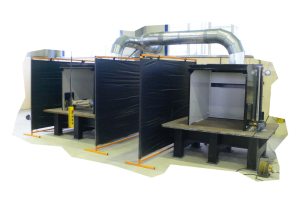
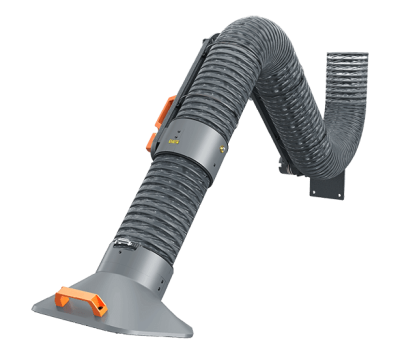
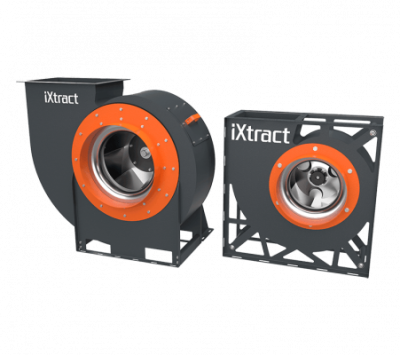
For fine and respirable particulates, effective control typically requires industrial dust extractors that capture contaminants at the point of generation, preventing them from dispersing into the workplace atmosphere or entering workers’ breathing zones.
To achieve this, Local Exhaust Ventilation (LEV) systems must be correctly designed, installed, and maintained. Factors such as hood placement, capture velocity, and duct configuration all play a significant role in determining how effectively airborne particles are removed from the working environment.
Appropriate filtration is equally important. H-class filtration is generally required for the most dangerous particulate fractions, helping to prevent contaminants from being recirculated into the air.
Employers must also ensure that LEV systems undergo thorough examination and testing at least every 14 months. Any defects identified during inspection should be addressed promptly.
Moreover, health surveillance may be required for workers who face regular exposure to substances associated with occupational lung disease. Regular monitoring can help identify early signs of ill health, allowing intervention before permanent respiratory damage develops.
Taking fine dust seriously
The invisibility of fine dust is precisely what makes it so dangerous. It generates no immediate warning, causes no obvious discomfort during exposure, and allows harm to accumulate across years of working life before any clinical sign appears.
Effective fine particulate management begins with a proper assessment of the processes and materials generating respirable particles, followed by LEV design and commissioning appropriate to the specific hazard.
Auto Extract Systems works with industrial businesses across the UK to assess, design, install, and test industrial dust extraction solutions capable of controlling dust at the source. If your current setup has never been evaluated with fine and respirable fractions in mind, now is the time to find out whether your workers are genuinely protected. Contact our team today to find out more.

