








You already know that dust and fume extraction is one of the most important investments you can make for your business.
You are well aware that it protects your workers from respiratory disease, reduces the risk of fire and explosion, keeps your facility clean and productive, and cuts down on equipment degradation caused by airborne particulates.
You also appreciate how it improves air quality, reduces sick days, and demonstrates to your workforce that their health is taken seriously.
You understand, too, that it is not optional. Under the Control of Substances Hazardous to Health (COSHH) Regulations 2002, employers have a legal duty to prevent or adequately control workers’ exposure to hazardous substances, including dust and fumes generated in the workplace.
Failure to comply can result in enforcement action from the Health and Safety Executive, significant fines and, in serious cases, prosecution. Beyond the legal framework, there is a straightforward ethical obligation: no worker should go home with lungs full of wood dust, silica, or welding fume because their employer did not put adequate controls in place.
So the only question remaining is which type of extraction system is actually right for your site: fixed or portable?
The right choice depends on the nature of your work, the layout of your site, and the volume of hazardous material being generated. Here is a straightforward breakdown to help you decide.
What Is a Fixed Extraction Unit?
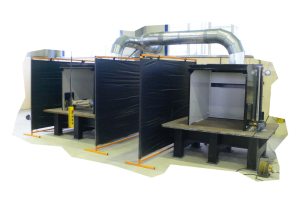
A fixed extraction unit is a permanently installed system, typically ducted through walls or ceilings to one or more collection points across a facility.
This setup works particularly well in environments where operations remain consistent.
Production lines, fabrication areas, and dedicated machine stations benefit from a
system that is built to match their layout.
Performance stands out as the key advantage. Fixed systems typically deliver stronger airflow, higher capture efficiency, and the ability to manage larger volumes of contaminants. This becomes essential in industries where dust or fumes are generated continuously throughout the day.
There is also a clear operational benefit. Once installed, the system becomes part of the workflow. Operators know exactly where extraction points sit, and processes run within a controlled environment that supports consistency.
Maintenance tends to follow a structured schedule. Filters, ducting, and airflow performance can be monitored centrally, which supports compliance requirements and simplifies inspection processes.
However, this level of integration comes with a trade-off. Flexibility becomes limited. Any changes to layout, machinery, or workflow may require adjustments to ducting or extraction points. That can introduce additional time and cost, especially in fast-evolving environments.
What Is a Portable Extraction Unit?
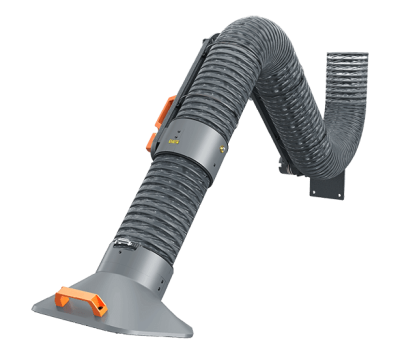
Portable fume extraction units offer a completely different approach. Instead of being tied to a single layout, they move with your work.
These systems are ideal for sites where tasks shift between locations. Maintenance teams, smaller workshops, and operations with varied workflows benefit from the ability to reposition extraction exactly where it is needed.
Flexibility defines their value. A single unit can support multiple workstations across different times of the day. This makes them particularly useful in environments where space is limited or where processes change frequently.
Installation remains straightforward. Portable units require minimal setup, allowing immediate use without the need for extensive ducting or structural modifications. This can support quicker decision-making when addressing new risks or temporary tasks.
There is also a practical advantage in terms of scalability. Additional units can be introduced as needed, supporting gradual growth without committing to a full system redesign.
That said, performance typically sits below that of fixed systems. Portable fume extraction equipment handles localised filtration effectively, though they may struggle in high-volume environments or where contaminants spread across larger areas. Its effectiveness often depends on correct positioning and operator awareness.
Key Factors to Consider
Nature of the work
If dust or fume is generated at permanent workstations throughout the day, a fixed system will almost always perform better and cost less to run over time. If the work moves around the site or varies significantly in location, portability is a practical necessity.
Volume of material generated
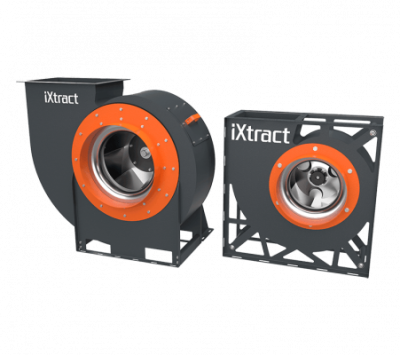
High-volume operations, such as continuous woodworking or welding lines, will quickly overwhelm a portable unit. Fixed systems with larger collection hoppers and more powerful motors are better suited to sustained, heavy-duty extraction.
Site permanence
If you are working on a temporary contract, a short-term project, or in rented premises, investing in a fixed installation makes little financial sense. Portable extraction systems give you the flexibility to take your equipment when you move on.
COSHH compliance
Both types of unit can meet COSHH requirements, but you must ensure whichever system you use achieves adequate control at the point of generation. A portable unit left on the other side of the room is not compliant, regardless of its specification. Equally, a poorly designed fixed solution with insufficient airflow at a workstation will fall short of the standard required.
Maintenance practicalities
Fixed systems concentrate maintenance in one place, which can simplify scheduled servicing. Portable units spread the responsibility across multiple machines, and there is a risk that maintenance gets overlooked when they are moved between jobs.
Can You Use Both?
Many sites do, and it is often the most practical answer. A fixed system handles the primary, high-volume dust at dedicated workstations, while portable units cover occasional tasks, remote areas of the site, or temporary work outside the main facility. The two approaches complement each other well, and a good extraction supplier can help you map out a combined solution.
Getting the Decision Right
Before committing to either option, carry out a proper assessment of your processes. Identify where dust and fumes are generated, how much is produced, and whether those locations are fixed or variable.
If you are uncertain, consult Auto Extract Systems, which can model airflow requirements for your specific situation. Whether a fixed installation, a portable setup, or a combination of both turns out to be the right answer, we have the expertise and the product range to deliver it.
Cutting corners on extraction is rarely worth it. The cost of enforcement action under COSHH, or worse, a workforce health claim further down the line, will far outweigh the investment in getting the right system from the outset. Contact us today.

